Pages

Showing posts with label Skin care. Show all posts

Friday, July 29, 2011

Skin Disease

Psoriasis

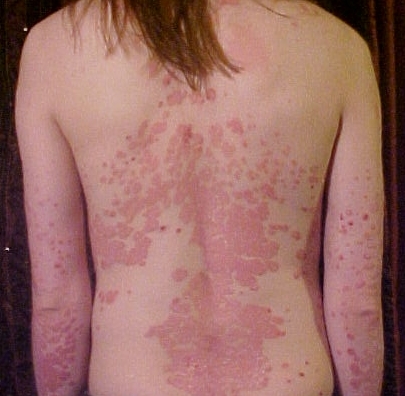
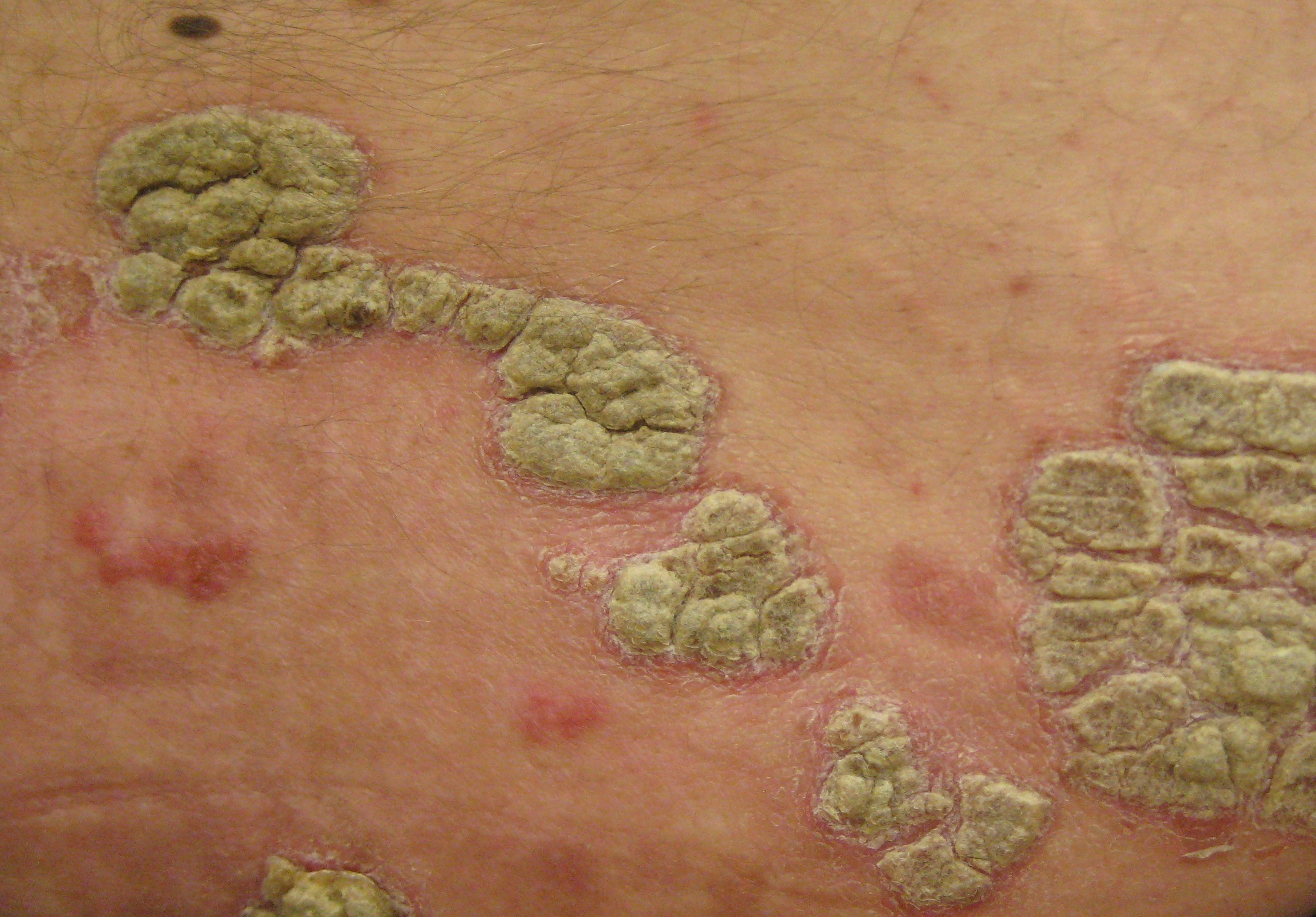
                              Psoriasis  is a chronic immune-mediated disease that appears on the skin. It occurs when the immune system sends out faulty signals that speed up the growth cycle of skin cells. Psoriasis is not contagious. There are five types of psoriasis: plaque, guttate, inverse, pustular and erythrodermic. The most common form, plaque psoriasis, is commonly seen as red and white hues of scaly patches appearing on the top first layer of the epidermis (skin). Some patients, though, have no dermatological symptoms.
                        In plaque psoriasis, skin rapidly accumulates at these sites, which gives it a silvery-white appearance. Plaques frequently occur on the skin of the elbows and knees, but can affect any area, including the scalp, palms of hands and soles of feet, and genitals. In contrast to eczema, psoriasis is more likely to be found on the outer side of the joint.
                            The disorder is a chronic recurring condition that varies in severity from minor localized patches to complete body coverage. Fingernails and toenails are frequently affected (psoriatic nail dystrophy) and can be seen as an isolated symptom. Psoriasis can also cause inflammation of the joints, which is known as psoriatic arthritis. Between 10% and 40% of all people with psoriasis have psoriatic arthritis.
The cause of psoriasis is not fully understood, but it is believed to have a genetic component and local psoriatic changes can be triggered by an injury to the skin known as the Koebner phenomenon see Koebnerisin. Various environmental factors have been suggested as aggravating to psoriasis, including stress, withdrawal of systemic corticosteroid, as well as other environmental factors, but few have shown statistical significance. There are many treatments available, but because of its chronic recurrent nature, psoriasis is a challenge to treat.

Signs and symptoms


Cause

                    The cause of psoriasis is not fully understood. There are two main hypotheses about the process that occurs in the development of the disease. The first considers psoriasis as primarily a disorder of excessive growth and reproduction of skin cells. The problem is simply seen as a fault of the epidermis and its keratinocytes. The second hypothesis sees the disease as being an immune-mediated disorder in which the excessive reproduction of skin cells is secondary to factors produced by the immune system. T cells (which normally help protect the body against infection) become active, migrate to the dermis and trigger the release of cytokines (tumor necrosis factor-alpha TNFα, in particular) which cause inflammation and the rapid production of skin cells. It is not known what initiates the activation of the T cells.
             The immune-mediated model of psoriasis has been supported by the observation that immunosuppressant medications can clear psoriasis plaques. However, the role of the immune system is not fully understood, and it has recently been reported that an animal model of psoriasis can be triggered in mice lacking T cells. Animal models, however, reveal only a few aspects resembling human psoriasis.
Compromised skin barrier function has a role in psoriasis susceptibility.
                        Psoriasis is a fairly idiosyncratic disease. The majority of people's experience of psoriasis is one in which it may worsen or improve for no apparent reason. Studies of the factors associated with psoriasis tend to be based on small (usually hospital based) samples of individuals. These studies tend to suffer from representative issues, and an inability to tease out causal associations in the face of other (possibly unknown) intervening factors. Conflicting findings are often reported. Nevertheless, the first outbreak is sometimes reported following stress (physical and mental), skin injury, and streptococcal infection. Conditions that have been reported as accompanying a worsening of the disease include infections, stress, and changes in season and climate. Certain medicines, including lithium salt, beta blockers and the antimalarial drug chloroquine have been reported to trigger or aggravate the disease. Excessive alcohol consumption, smoking and obesity may exacerbate psoriasis or make the management of the condition difficult or perhaps these comorbidities are effects rather than causes. Hairspray, some face creams and hand lotions, can also cause an outbreak of psoriasis. In 1975, Stefania Jablonska and collaborators advanced a new theory that special antibodies tend to break through into the lower layers of the skin and set up a complex series of chemical reactions.
                     Individuals suffering from the advanced effects of the human immunodeficiency virus, or HIV, often exhibit psoriasis. This presents a paradox to researchers, as traditional therapies that reduce T-cell counts generally cause psoriasis to improve. Yet, as CD4-T-cell counts decrease with the progression of HIV, psoriasis worsens. In addition, HIV is typically characterized by a strong Th2 cytokine profile, whereas psoriasis vulgaris is characterized by a strong Th1 secretion pattern. It is hypothesized that the diminished CD4-T-Cell presence causes an overactivation of CD8-T-cells, which are responsible for the exacerbation of psoriasis in HIV positive patients. It is important to remember that most individuals with psoriasis are otherwise healthy, and the presence of HIV accounts for less than 1% of cases. The prevalence of psoriasis in the HIV positive population ranges from 1 to 6 percent, which is about three times higher than the normal population. Psoriasis in AIDS sufferers is often severe, and untreatable with conventional therapy.
                         Psoriasis occurs more likely in dry skin than oily or well-moisturized skin, and specifically after an external skin injury such as a scratch or cut (see Koebner phenomenon). This is believed to be caused by an infection, in which the infecting organism thrives under dry skin conditions with minimal skin oil, which otherwise protects skin from infections. The case for psoriasis is opposite to the case of athlete's foot, which occurs because of a fungus infection under wet conditions as opposed to dry in psoriasis. This infection induces inflammation, which causes the symptoms commonly associated with psoriasis, such as itching and rapid skin turnover, and leads to drier skin, as the infecting organism absorbs the moisture that would otherwise go to the skin. To prevent dry skin and reduce psoriasis symptoms, it is advised to not use shower scrubs, as they not only damage skin by leaving tiny scratches, but they also scrape off the naturally occurring skin oil. It is recommended to use talc powder after washing, as that helps absorb excess moisture which would otherwise go to the infecting agent. Additionally, moisturizers can be applied to moisturize the skin, and lotions used to promote skin oil gland functions.

 Diagnosis 

A diagnosis of psoriasis is usually based on the appearance of the skin; there are no special blood tests or diagnostic procedures. Sometimes, a skin biopsy, or scraping, may be needed to rule out other disorders and to confirm the diagnosis. Skin from a biopsy will show clubbed rete pegs if positive for psoriasis. 
some suggested product by doctor from Skin Disease.....

Adovia Natural Dead Sea Mud Soap - Great for Eczema, Psoriasis or Acne!TriDerma MD Psoriasis Control 2.2 oz (62 g)Psoriasin Multi-Symptom Psoriasis Relief Ointment, Intensive Moisturizing, 4 Ounces (Pack of 2)Healing Psoriasis: The Natural AlternativeLoma Lux Homeopathic Medicine, Psoriasis, 8 fl oz (237 ml)Miracle of Aloe Dead Sea Salt Psoriasis Cream (2 oz)Triton Mg 217 intensive strength medicated tar ointment for psoriasis - 3.8 ozYour Healing Diet: A Quick Guide to Reversing Psoriasis and Chronic Diseases with Healing FoodsOxipor VHC Psoriasis Lotion, Coal Tar Solution, 4-Ounce BottleMg 217 Medicated Tar Shampoo for PsoriasisPsoriasin Multi-Symptom Psoriasis Relief, Vanishing Gel, .75 Ounces (Pack of 3)Natural Dead Sea Salt - Unscented, Treat Psoriasis - 10 PoundsPsoriasin Multi-Symptom Psoriasis Relief Ointment 4 oz (113 g)Psoriasis Healing from the Inside OutHome Health - Psoriasis Medicated Scalp & Body Wash, 8 fl oz liquidEgyptian Magic - 4 oz Jar,(Egyptian Magic)Coal Tar Soap Bar (Black) (110g) Brand: SoapWorksFlexitol Naturals Eczema Psoriasis Wash 7 fl ozDr. John's Healing Psoriasis Cookbook...Plus!Dermarest Psoriasis Scalp Treatment Gel - 4 OzPsoriasis: The Real Way Out: A Self-Education Guide to Complete Natural Healing, 2nd Edition 2008

Thursday, July 28, 2011

Eye


The human eye is an organ which reacts to light for several purposes.
      As a conscious sense organ, the eye allows vision. Rod and cone cells in the retina allow conscious light perception and vision including color differentiation and the perception of depth. The human eye can distinguish about 10 million colors.
       In common with the eyes of other mammals, the human eye's non-image-forming photosensitive ganglion cells in the retina receive the light signals which affect adjustment of the size of the pupil, regulation and suppression of the hormone melatonin and entrainment of the body clock.
Olay Regenerist Eye Lifting Serum, 0.5 Ounce (Packaging May Vary)Aveeno Active Naturals Positively Ageless Lifting & Firming Eye Cream with Natural Shitake Complex, 0.5-Ounce BottlesL'Oreal Paris Advanced RevitaLift Eye Day/Night Cream, 0.5 OunceRoC Retinol Correxion Eye Cream, 0.5-Ounce TubeAquasentials Cool or Warm Gel Eye Mask /w Clear PouchLewis N. Clark Comfort Eye Mask, Black
Importance of EYE :
Eyes are really important. It makes us see all things may it ugly or pretty.
           Close your eyes and imagine you have not seen ever since the world and yourself. You will not have an idea with what it looks like when you only feel it. Eyes are very important for the human body. It helps the human body to do its tasks with coordination. Without it, a man won't be able to see the beauty of this wonderful world. Eyes are the windows of the soul. Without eyes, the five basic senses would not be complete. So, it should be present. 
           Eyes are the parts of our body that perceive light. They allow us to see the world and to understand how objects relate to each other. We can distinguish far objects from close ones and determine their color and shape.
            
How do the eyes interact with other parts of the body? (Interaction with other Body Parts)

       The brain processes the raw data from the eyes to make sense of what you see compared to your knowledge of the world around you. The brain interprets what it receives from the eyes. You do not directly "see".
         A clear example of this can be seen from experiments where subjects wear glasses that invert the view (turn it upside down). After a while the brain will adjust and turn the scene back up the right way because that agrees with other more reliable information you are receiving.
        Similarly the brain adjusts changes in color and light levels to better match how the objects should appear.
           It also combines the two slightly different views from your left and right eyes to work out the distance of objects from you. Your right eye will show a little more of an object's right side and the left eye will show more of an objects' left side. This is called stereoscopic vision. The difference between the views from each eye becomes less the further the object is away from you.
             Our perceptions are not perfect and can lead to misinterpretations of what we see. These are called optical illusions.However even though the brain's processing can be inaccurate, at most times we perceive a faithful reconstruction of the real world. Only optical illusions remind us that there is at times a difference between perception and the true state of affairs. Without our eyes and the complex processing of visual information by our brains we would not be able to make sense of writing, art or photos, nor understand as much as we do from limited visual information.
"If you care your Eye "
"If you don't care your Eye"

This are some products using that u can care your beautiful Eye...

Aveeno Active Naturals Positively Ageless Lifting & Firming Eye Cream with Natural Shitake Complex, 0.5-Ounce BottlesLoreal Skin Genesis Daily Eye Treatment Eye Serum .5 oz.Flents Plastic Eye Wash CupBausch & Lomb Collyrium Eye Wash, 4-Ounce Bottles (Pack of 3)Bausch & Lomb Advanced Eye Relief Eye Wash, 4-Ounce Bottles (Pack of 6)Eye Wash Cup 1 CountOcuFresh Eye Wash 6 ea


Dark spot on eye :


        The human eyeball contains a clear transparent gel like structure called the "vitreous". 
       The vitreous consists mainly of water and a few solid elements. The 'solid' portion consists of collagen fibrils and molecules of hyaluronic acid. 
       As we grow older, there is a chemical change in the vitreous causing it to become "more liquid". This is also associated with 'grouping' or 'aggregation' of the collagen fibrils into small clumps.
      These 'clumps' throw a shadow on the retina producing a sensation of 'dots' or 'threads' - this is commonly referred to as a 'Floater'.

        Over time you will become less aware of these floaters as the brain learns to ignore these retinal images. Therefore, some floaters may remain in your vision, but many of them will fade over time and become less bothersome.
         Floaters, if present since a long time or increasing in number very gradually, are harmless. They may be annoying but do not cause any problems. However, if a new floater comes on abruptly or if there is a sudden increase in the number of floaters, then you must be examined immediately to rule out a retinal tear.
      Debris in the tear film can sometimes produce a sensation of 'moving dots' across the line of sight.
     The key to differentiating, debris in the tear film from vitreous floaters is that they disappear with blinking only - without eye movement. 
       Vitreous floaters typically will move more with eye movements rather than with blinking. 
      In most cases floaters are simply an annoyance. An eye examination will usually reveal if there's something serious that needs medical attention. 
      Sudden appearance of new floaters, sometimes accompanied by apparent flashes of light in the peripheral (side) vision, should be evaluated by an qualified ophthalmologist. 
       On rare occasions, these symptoms can be a danger sign that a retinal tear has occurred. The only way to diagnose the actual cause of the problem is by a complete eye examination -- preferably by a vitreoretinal specialist. 

REMOVE DARK SPOT FROM YOUR EYE...

Salicylic Acid 20% Gel Peel, 30ml (Professional)Rh8 Jamela Lemon Whitening Sleeping Eye Mask Eye CreamL'Oreal Dermo-Expertise Age Perfect Double Action De-Crinkling & Illuminating Treatment for Mature Skin, 1-Ounce BottleGarnier Light Fairness & Dark Spot Prevention Day Cream 20 mlHydrolyze (.5 Oz) Dark Circle Under Eye Cream Treatment By Hydroxatone (Brand New Blue Packaging)UNT Eclat Eye Gel - Dark Circle Eye TreatmentEmerita Dark Circle Eye Serum, .5-Ounce BottleOlay Total Effects 7-in-1 Anti-aging Eye Cream Line and Dark Circle Minimizing Brush, 0.20-OunceUnder EyeBryten Severe Dark Circles and Under-Eye Puffiness Formula, 1 oz (30 ml)


Dark circles under Eyes or Dark Circles Beneath eyes :

          Dark circles under eyes are very common beauty complaint. Nine out of 10 people have dark circles under their eyes at one time or another. How dark circles under eyes are caused ? The skin under our eyes is very thin. As we get exposed to sun rays, the skin under the eyes gets damaged and becomes more thin and wrinkled. The veins below this thin skin start looking prominent. Thus the wrinkles and prominent veins form dark circles. Some times pigmentation also causes dark circles.

Causes of dark circles under eyes:

       Age, Over exposure to sun, Lack of sleep, Lack of nutrients, Allergies, Eczema, Asthma, Hereditary, Fatigue, Chronic diseases, Pregnancy, Menstruation

Solutions for under eye dark circles :

L'Oreal Paris Men's Expert Hydra-Energetic Ice Cold Eye Roller, 0.33-Fluid OunceEye Revival (.5 Oz) Age Deying Eye Serum - Reduces Wrinkles, Dark Circles & Under Eye Puffiness(2 jars) Queen Bee 100% All-Natural, Organic Under Eye & Anti Wrinkle Balm - Removes Dark Circles, Facial Lines and Wrinkles Naturally - .5oz each jarVita-K Solution Professional Dark Circles 0.5 oz.HydroPeptide Anti-Wrinkle Dark Circle ConcentrateL'Oreal Men's Expert Circle Eraser Anti-Dark Circle Eye Moisturizer 15ml/0.5oz
Take care your EYE....